This article covers:
It’s January. You’ve told yourself this is the year you’ll apply to 30 new opportunities, finish four bodies of work, land your first solo show, build a consistent studio practice – all whilst juggling work, family, relationships, and a social life, whilst staying mentally sound and physically healthy. It’s no wonder that by November, having completed 10% of the above, you feel like a failure.
There’s merit to being ambitious and dreaming big as an artist. And yes, you can contain multitudes of creativity. However, the vague New Year’s resolutions you set can dwindle as fast as January momentum fades. There’s also a disproportionate gap between where you are and those highly ambitious creative goals. You want to build sustainable art habits and swim steadily towards your artistic goals, not ride great big crests of waves that hurtle you crashing down and sweep you back where you started.
Why traditional resolutions fail artists
Traditional resolutions fail artists for multiple reasons:
- They’re outcome-focused in a field where you don’t control outcomes (you can find the best creative opportunities, but this doesn’t guarantee success)
- They assume linear progress (creativity isn’t linear)
- They add pressure to an already pressurised practice (hello burnout)
- They’re borrowed from corporate productivity culture (quarterly targets don’t always work for art-making where artists might operate in different seasons)
So here are some alternative approaches that actually work for people with creative practices.
What if your year could capture a feeling?
What if, instead of setting New Year’s resolutions, you captured the feeling of your year ahead in just one word?
Fun. Curiosity. Discipline. Experimentation.
It’s not a vague resolution or a rigid SMART goal, but rather a focus point – a creative compass to guide your artistic decisions throughout the year. Think of it as your personal creative manifesto distilled into a single, powerful word.
Here’s how it works: Every opportunity, project, and collaboration gets measured against one simple question: “Does this feel aligned with [your word]?”
Invited to a group show but feeling overwhelmed? Check in with your word. Considering a new commission? Run it past your creative compass. This artist goal-setting approach gives you permission to say yes to what matters and no to what drains you, without the guilt that comes with abandoned resolutions.
Using your word as a filter
When you’re scrolling through open calls for artists, your word becomes a filter. If your word is ‘collaboration’, then perhaps this means you’re only applying to group shows and development projects where you can meet new people and work with others. Use your word to help your decision making with checking if the opportunity is right for you.
Want more articles like this?
Give this one a like
Everything has its season
The best part about seasons is that they change – you have full permission to adapt your word according to what feels right for your creative season.
We all know that artists already work in natural creative cycles – making work, applying for opportunities, exhibiting, then resting. Your artistic practice ebbs and flows throughout the year. So why do traditional New Year’s resolutions pretend you can do it all simultaneously? Why force yourself into a one-size-fits-all goal-setting approach that ignores the rhythms of creative work?
Seasonal goal-setting for artists acknowledges what you already know intuitively: sustainable creativity requires different energies at different times. You’re not failing when you’re not producing in January – you might simply be in a rest or planning phase. And this awareness is essential for long-term artistic success.
The shifting seasons
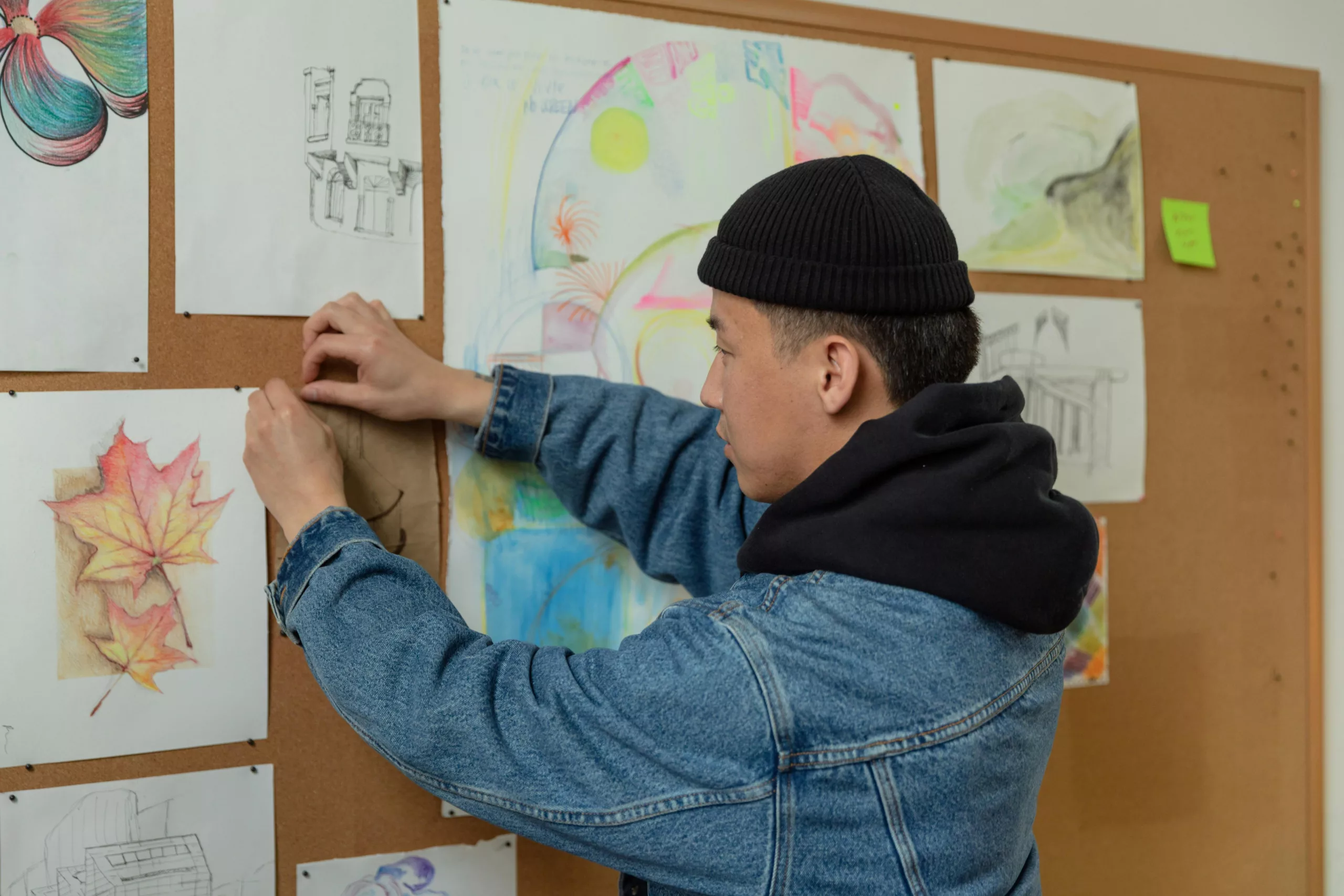
Winter might be your ‘planning’ season – mapping out your creative year, setting boundaries around your studio practice, and protecting time for reflection.
Spring could shift to ‘building’ – making new work in the studio and strategically applying to open calls and opportunities on Zealous without burning out.
Summer becomes your ‘connection’ season – building relationships with fellow artists, curators, and collectors, nurturing connections with your creative friends, and collaborating on future projects.
Autumn transitions to ‘sharing’ – exhibiting work, attending gallery openings, and selling your art work to new audiences.
Compound interest for your practice
You can’t control whether you get the open call you’ve applied for. But you CAN control ‘putting in the work’ (e.g. showing up to the studio on Tuesday and Thursday for 90 minutes). Rather than measuring your New Year’s resolutions as outcomes (e.g. ‘land solo show’), instead measure them as habits (‘work done’).
This shift from outcome-based goals to habit-based artist goals transforms how you approach your creative practice. You’re no longer at the mercy of external validation – you’re building a foundation that compounds over time.
- Time-block your creative practice:
If you want to build a consistent studio habit, it needs to live in your calendar like any other important commitment. For example: Tuesdays 7-9pm is studio time. This is how professional artists protect their creative practice. - Keep showing up, even imperfectly:
Can’t manage 2 hours on Tuesday? Show up for 30 minutes anyway. Compound creative growth works even with small deposits. A year of 30-minute studio sessions beats waiting for the perfect 4-hour window that never comes. Consistency compounds into significant output over time. - Give yourself grace when life happens:
Don’t abandon your entire creative routine because you were ill, overslept, or had an emergency. Simply acknowledge the interruption, return to your foundations as soon as possible, and keep building. The goal isn’t perfection; it’s sustainable creative practice that adapts to real life.
Discipline before motivation
When you’re scrolling through open calls for artists, your word becomes a filter. If your word is ‘collaboration’, then perhaps this means you’re only applying to group shows and development projects where you can meet new people and work with others. Use your word to help your decision making with checking if the opportunity is right for you.
Free account
Be a part of our creative community
The honest check-in conversations
New Year’s resolutions often fail because we’re intensely focused on them through early January, yet by the time February rolls around, they’re forgotten. Without regular creative goal check-ins, entire seasons slip away before you realize you’ve drifted off course.
Regular self-reflection creates the self-awareness artists need to adjust course before burnout, misalignment, or creative drift takes hold. This is how you turn seasonal goal-setting into sustainable creative practice rather than another abandoned resolution.
Schedule your creative check-ins:
Set a calendar reminder for the end of each season (monthly or quarterly works well). Treat this like any other important creative commitment.
Ask yourself these honest questions:
- What made me feel energized and fulfilled this season?
- What distracted me or drained my creative energy?
- Am I still moving in the direction I want to go creatively?
“Does this still feel right for my artistic practice?”
Are the creative opportunities you’re applying to still aligned with your chosen word or seasonal focus? Or are you frantically applying to everything out of panic, anxiety, or the pressure to appear ‘productive’? This honest assessment prevents the burnout that comes from chasing opportunities that don’t serve your actual creative vision.
If your winter word was ‘rest’ but you’ve applied to 20 opportunities requiring immediate work, something’s misaligned.
These check-ins are about noticing patterns, celebrating what’s working, and gently redirecting what isn’t. This is the self-compassion that traditional goal-setting systems completely miss.
Visualisation and vision boarding
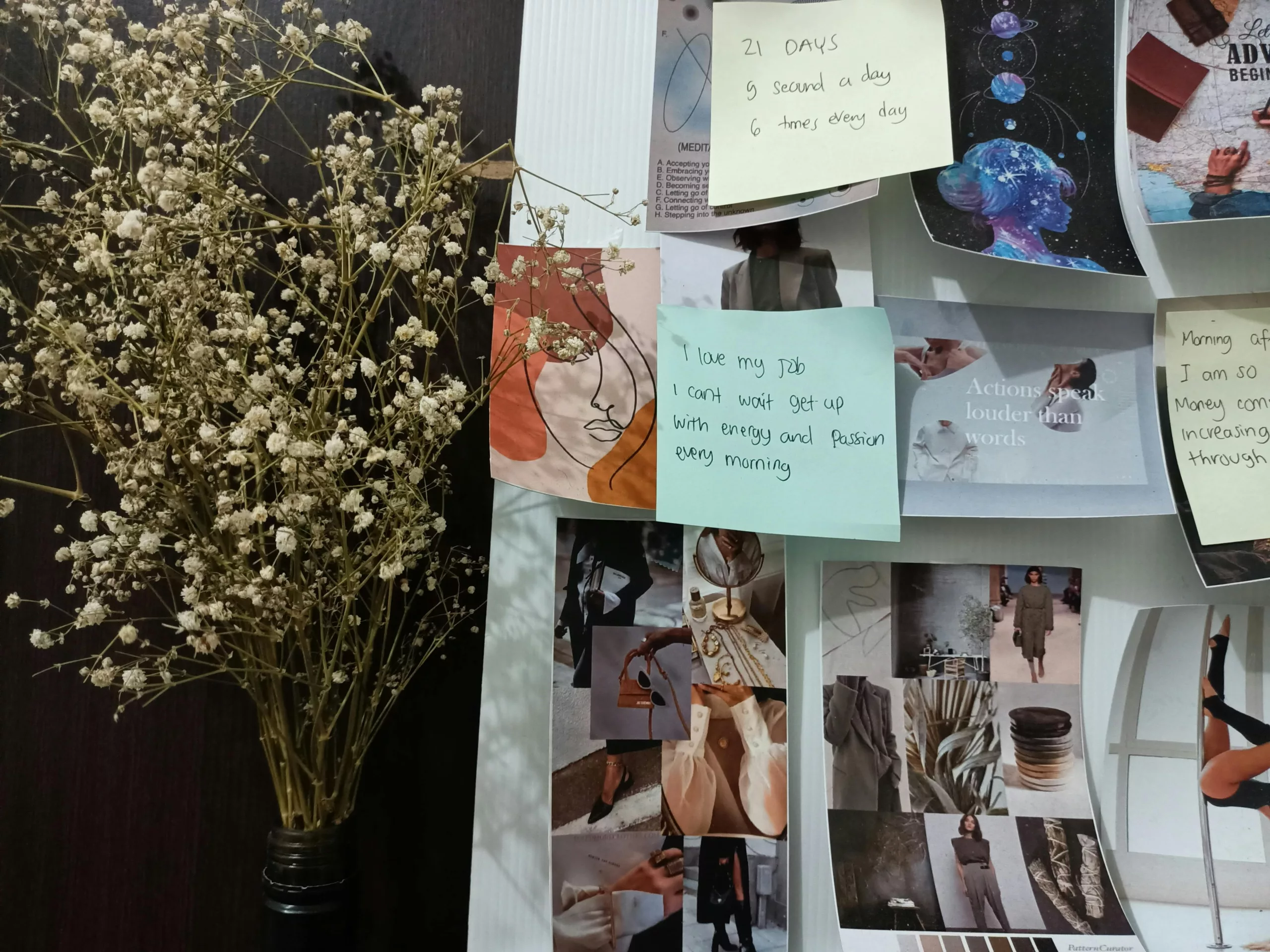
Vision boarding is an inherently creative practice, so why not inject some artistry into your goal-setting this year? Instead of another spreadsheet or rigid plan, make a vision board based on the seasons, habits, or creative intentions you want to commit to.
This can be a digital collage, a hand-drawn illustration, a mixed-media piece, or anything that speaks to your creative process. Even better, create vision boards alongside your creative friends to turn goal-setting into a collaborative, inspiring experience rather than an overwhelming one by yourself.
You can display your vision in a prominent place – a digital background on your phone screen and laptop desktop, by your mirror in your room, or at your desk. These visual references will act as cues to help you keep on track.
The neuroscience of visualisation
Neuroscience research demonstrates that visualizing your creative goals activates similar brain regions to actually performing those actions. When you create a vision board or write down your artistic intentions, you’re essentially training your brain’s attention system to notice opportunities that align with your creative vision.
Once you’ve visually committed to your focus, (‘connection’ for example,) your brain becomes primed to notice networking events, collaboration opportunities, and potential creative partnerships that you might have previously overlooked.
Being flexible to pivot
Being too fixed on specific outcomes can blind you to the happy accidents, unexpected curiosities, chance encounters, and spontaneous collaborations that often define creative breakthroughs.
By staying flexible and open-minded with your creative goals, you can move fluidly with opportunities as they arise. Leaving room for pivots means you can say yes to the right opportunities when they appear – even if they weren’t part of your original plan.
Think of your goals as a compass, not a map
This is the fundamental difference between sustainable creative goal-setting and traditional resolutions.
A map shows a fixed route with predetermined stops. If you encounter a closed road or discover something fascinating off-route, the map doesn’t help – it just shows you how far you’ve deviated from the plan.
A compass, however, points you in a direction while allowing the route to evolve based on what you discover along the way. Your creative compass might point toward ‘building meaningful connections’ (your summer word), but how you get there (gallery openings, artist residencies, online communities, unexpected collaborations) can shift and adapt.
Your seasonal words and habit-based goals provide direction without demanding rigidity. They guide your artistic practice while leaving space for the magic that happens when you’re open to change.
You can have it all, just not all at once
New Year’s resolutions make us feel like we need to achieve everything all at once. It is possible to achieve meaningful creative goals over the course of a year, but you must be prepared for the inevitable changes in direction, necessary pivots, unplanned illnesses, unexpected life events, and everything else that makes us human beings.
The goal is to build a creative practice flexible enough to accommodate real life, while still moving you forward. This is what separates artists who sustain long-term creative careers from those who burn out and abandon their practice entirely.
Here are a few other phrases to keep in mind:
The best creative practice is the one you can maintain for decades, not just January.
Take your practice seriously, just don’t take yourself too seriously in pursuit of your goals.
Rest isn’t the opposite of productivity, it’s what makes long-term productivity possible.
Doing more vs doing what matters
Maybe 2026 isn’t about doing more. Maybe it’s about doing what matters, in the season it matters, with the discipline to keep showing up – and the grace to rest when you need to. This is what it means to honour both your ambition and your humanity.
And above all, give yourself the compassion that traditional goal-setting systems never offer. Your creative work deserves this kind of intentional, sustainable approach. And so do you.
Explore Other Opportunities
From competitions, to grants, and open calls –
discover opportunities that fuel your creativity.
Want us to write more content like this? Give it a like
Share

Carmela Vienna
Frequently Asked Questions
What’s wrong with traditional New Year’s resolutions for artists?
Traditional New Year’s resolutions are designed for linear, outcome-based achievement – they don’t account for the cyclical nature of creative work. Artists naturally move through phases of making, applying, exhibiting, and resting. Rigid resolutions that demand constant productivity ignore these creative rhythms and set you up for burnout and feelings of failure when life inevitably intervenes.
How is choosing a word different from setting a goal?
A word provides direction and focus without the pressure of measurable outcomes. Instead of ‘land 3 solo shows’ (which depends on external factors you can’t control), a word like ‘visibility’ or ‘courage’ guides your decisions and actions throughout the year. You can measure alignment with your word, but you can’t ‘fail’ at it – making it far more sustainable for creative practice.
Can I change my word mid-year if it doesn’t feel right anymore?
Absolutely. Flexibility is the whole point. If your January word was ‘discipline’ but by March you’re burned out and need rest, honour that shift. Your word should serve your creative wellbeing, not trap you in a commitment that no longer fits. Many artists choose different words for different seasons rather than committing to one for the entire year.
How often should I do creative check-ins?
At a minimum, check in at the end of each season (quarterly). Monthly check-ins work well if you want more frequent course correction. The key is scheduling these in your calendar like any other important commitment – they’re not optional if you want to stay aligned with your creative intentions throughout the year.
What’s the difference between habit-based and outcome-based goals for artists?
Habit-based goals focus on actions you control: “show up to studio Tuesday and Thursday.” Outcome-based goals depend on external factors: “get accepted into 5 exhibitions.” You can’t control curators’ decisions, but you can control showing up to make work. Habit-based goals build sustainable creative practice; outcome-based goals create anxiety and feelings of failure when external factors don’t cooperate.